I have been playing the viola since the third grade. I chose it over the violin and cello for its rich and deep tone. Like its siblings the viola is also made of wood. Wood expands and shrinks due to humidity and temperature. The bridge on orchestral instruments is the most crucial component and is held in place by the string pressure. It is in charge of transferring the energy of the strings to the body that amplifies the sound. During my schools orchestral concert my section member’s bridge popped off and broke. To buy a new bridge costs around $50. This is due to the skills and labor needed to install a new bridge. A bridge must be tailored to each instruments complex curvature. To prevent from paying this cost and to having a spare on hand I thought why not model my bridge and reproduce it. How would a 3D printed bridge perform compared to a traditional wooden bridge?

I began by tracing the bridge to create its profile. However this was not accurate enough. I transitioned to taking a picture of the bridge. Then importing the JPEG file into Fusion 360 as a canvas and tracing the image using the spline tool.
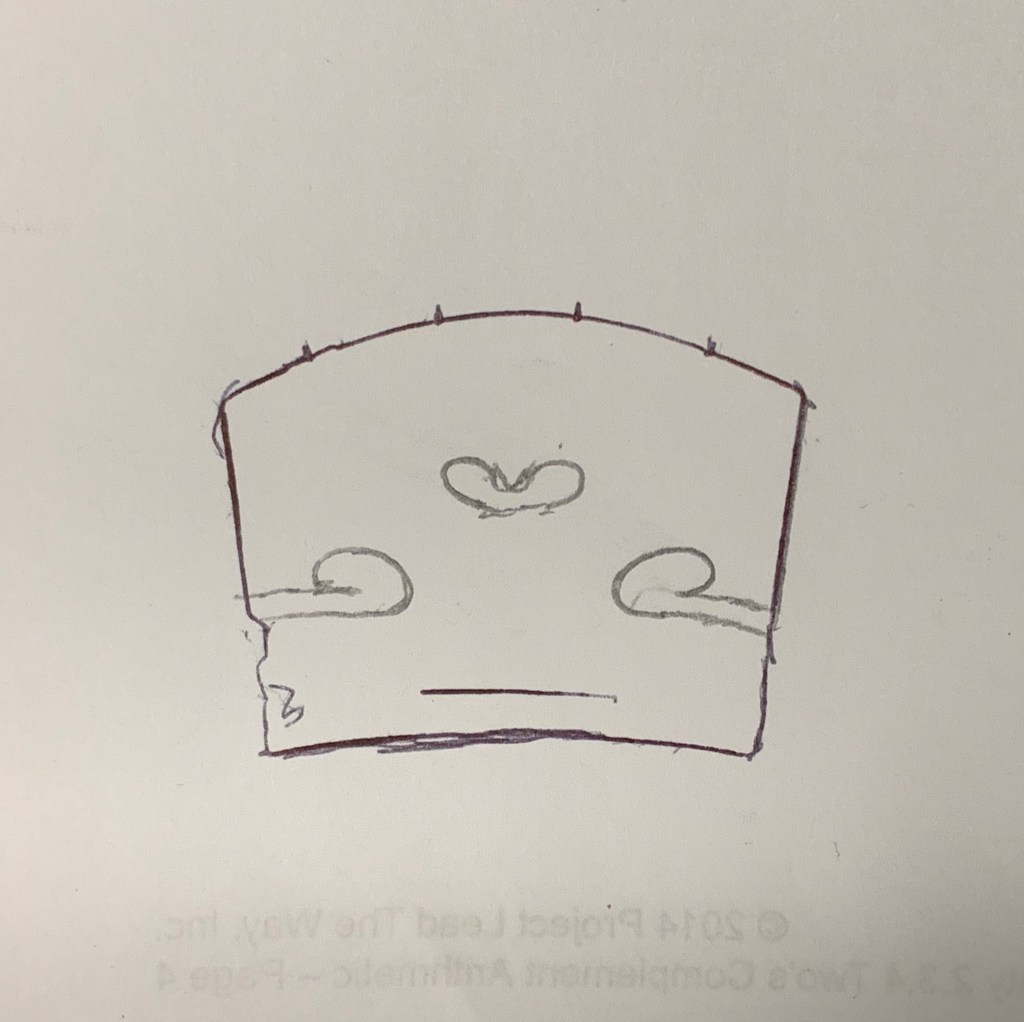
Bridge Hand Tracing 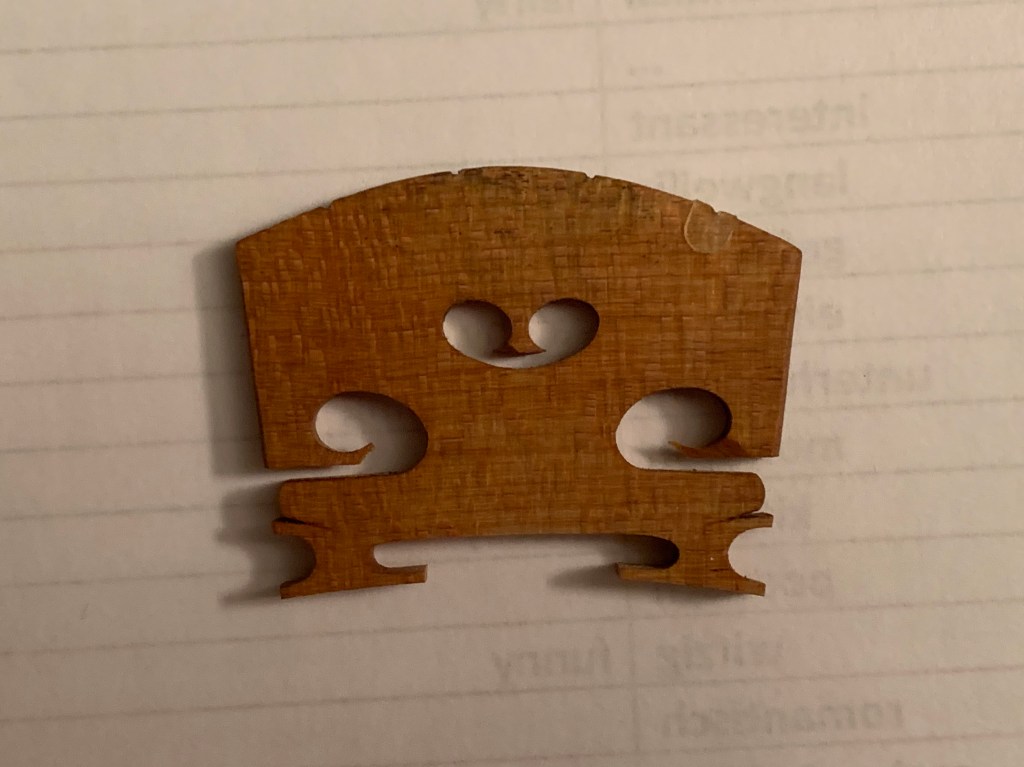
Bridge Image 
Bridge 3D Model
Next step was to deign variations of the bridge to test how sound quality is effected. I designed very diverse bridge shapes compared to traditional bridges. Experimenting with weight, size and amount of material contacted to the viola body.
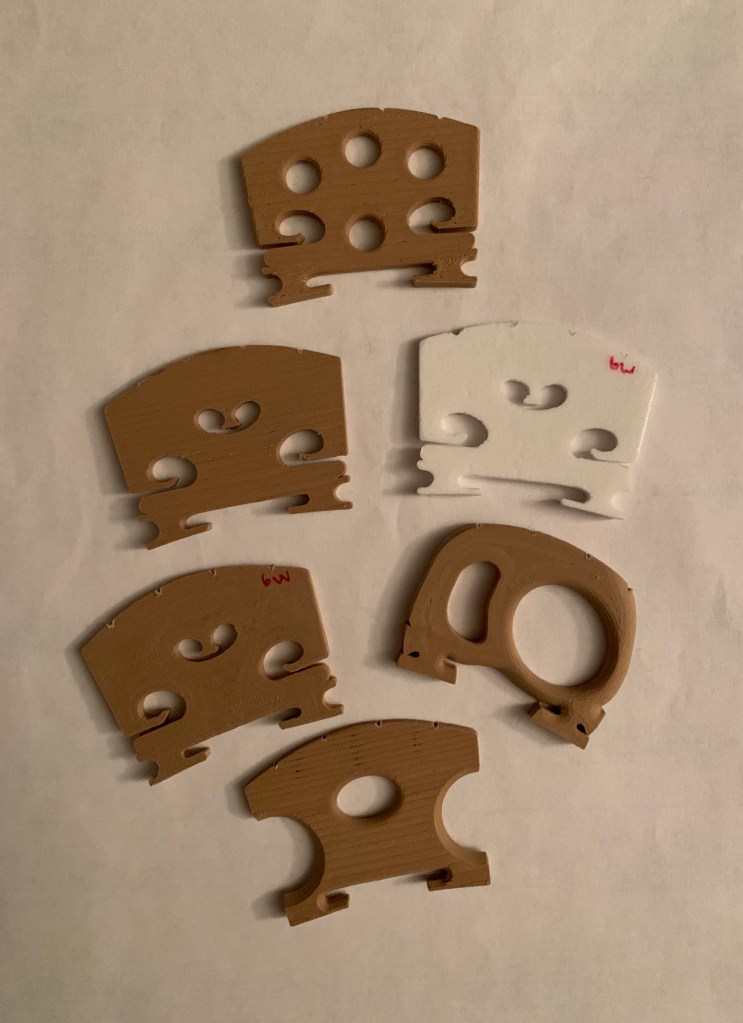
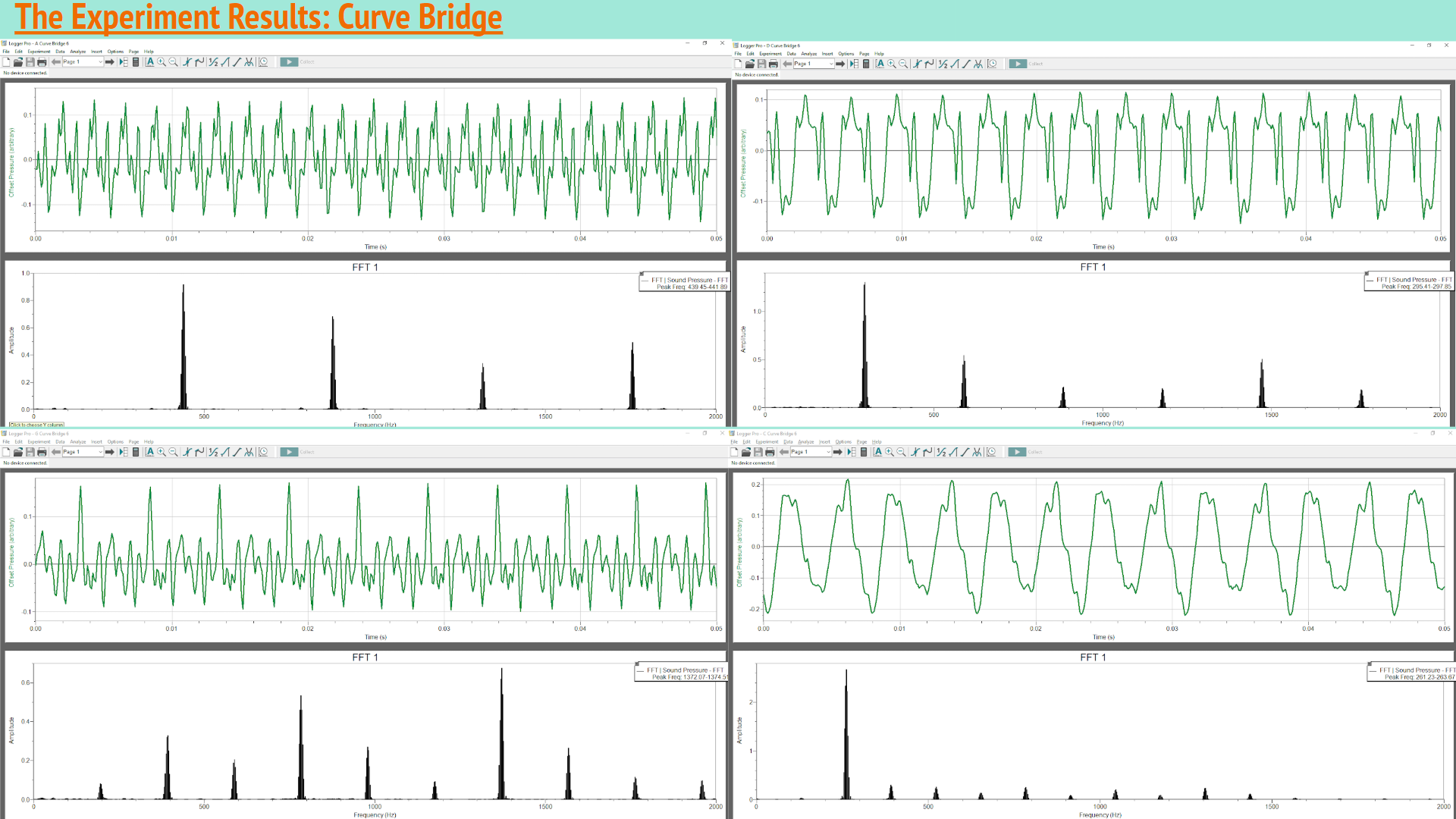
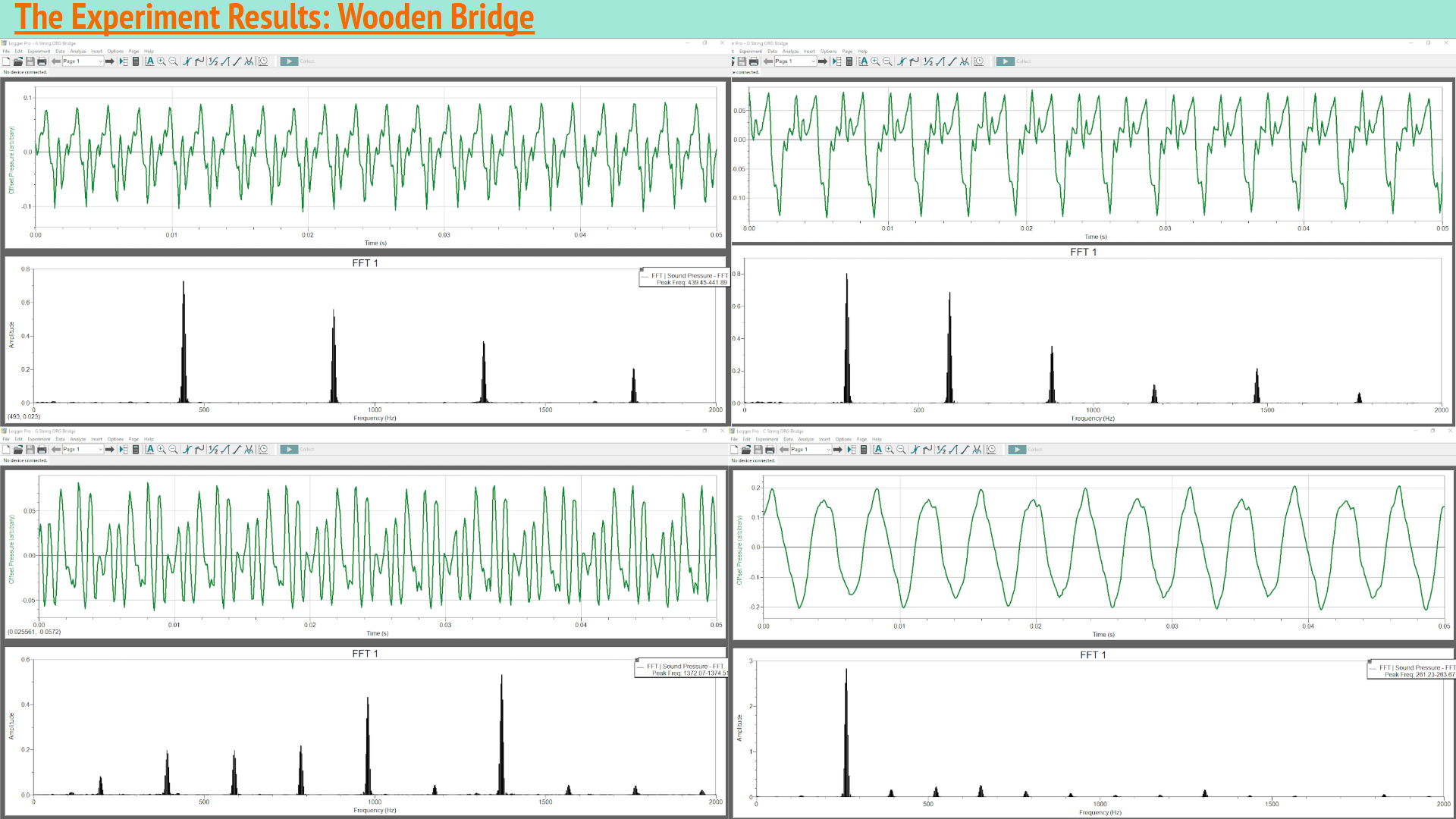
I discovered wood infused PLA from Hatchbox. The filament has 40% wood fibers from cork, sawdust, and plant based materials. Thinking that this would influence the sound for the better I printed most of the bridges in that material. I created a sound analysis in Logger Pro using a frequency x amplitude graph. The goal is to create a 3D printed bridge that is closet to the output analysis given by the original wooden bridge. I measured the frequency and amplitude on each individual string. This gave me the ability to see each bridges abilities of producing low to high frequencies.
My evidence suggests the curved bridge performs the best compared to the other 3D printed bridge designs. The peeks that were created in the frequency x amplitude graph were closest to the original wooden bridge. The 3D printed curve bridge is printed with 6 perimeters. More perimeters gave the bridge a better overall sound. More infill seemed to have dissipated the sound.
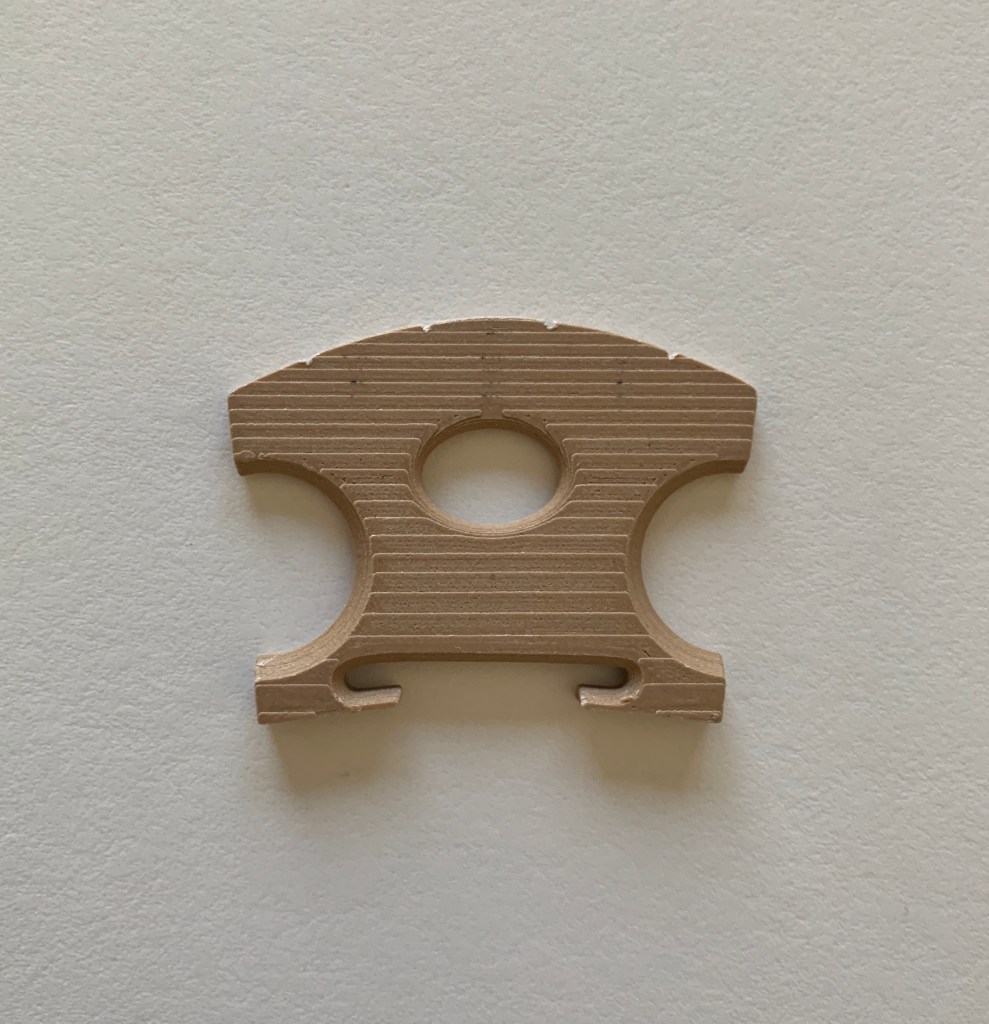
Curved Bridge: Best 3D Printed Bridge Design 
Original Wooden Bridge
 Andrew Stack